What the Sauna Studies Actually Say — and What You Were Told They Say
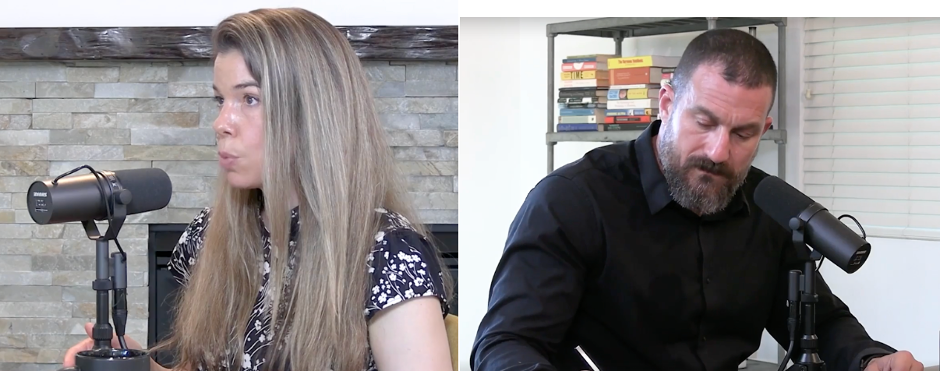
If you have spent any time in the wellness and longevity corner of the internet, you have almost certainly encountered the sauna claims. On the Huberman Lab podcast — one of the most-listened-to science programs in the world — Dr. Rhonda Patrick delivered a set of statistics so striking that they have since been repeated across hundreds of YouTube videos, Reddit threads, and biohacking forums: a 60% reduction in Alzheimer’s risk. A 50% drop in cardiovascular mortality. A 60% lower rate of sudden cardiac death. A precise duration threshold of more than 19 minutes required to see any real benefit.
The numbers are real, in the sense that they appear in published papers. But the impression those numbers create — that we have strong, reliable, causal, and actionable evidence for enormous health benefits from sauna use — is not supported by what the research actually shows. The gap between what was said and what the evidence warrants is wide enough to matter.
The Studies Themselves
Patrick’s claims rest on two papers from the Finnish Kuopio Ischemic Heart Disease Risk Factor Study (KIHD): Laukkanen et al. (2015), published in JAMA Internal Medicine, examining cardiovascular and all-cause mortality; and Laukkanen et al. (2017), published in Age and Ageing, examining dementia and Alzheimer’s disease. Both are prospective observational cohort studies following the same population of 2,315 middle-aged men from Eastern Finland, with baseline measurements taken between 1984 and 1989 and follow-up of approximately 20 years.
Note that critical detail: it is the same 2,315 Finnish men, the same baseline questionnaire, the same dataset — analyzed twice, for different outcomes. When the cardiac findings and the dementia findings are presented together as “converging lines of evidence,” this creates a false impression of independent replication. They are not independent. They are one study, run twice on the same cohort.
The Claims, Examined One by One
Claim 1: “A greater than 60% reduction in risk of Alzheimer’s and dementia”
The dementia paper reports a hazard ratio of 0.34 for dementia and 0.35 for Alzheimer’s in the highest-frequency group — roughly a 65–66% reduction. So far, so accurate. But consider what the 4–7 times per week group actually looked like: 201 men, producing just 8 dementia cases and 5 Alzheimer’s cases over 20 years.
The entire claim rests on these tiny numbers. The 95% confidence interval for the Alzheimer’s hazard ratio runs from 0.14 to 0.90 — meaning the true effect could be anywhere from a 10% to an 86% reduction. Patrick presents “65%” as a precise, reliable figure. It is a point estimate balanced on a handful of events.
Claim 2: “50% reduction in cardiovascular mortality”
The cardiac paper reports a hazard ratio of 0.50 for fatal CVD, with a confidence interval of 0.33–0.77. The 50% figure is arithmetically correct. The comparison group is men who sauna once per week — not non-sauna users. The effect of going from zero to some sauna use may be much smaller, larger, or impossible to estimate from this data. Framing the comparison as “sauna vs. no sauna” — as popular summaries invariably do — misrepresents the study design.
Claim 3: “Sudden cardiac death is 60% lower”
The paper reports a hazard ratio of 0.37, with a confidence interval of 0.18–0.75, based on 10 sudden cardiac death events in the high-frequency group. The confidence interval is strikingly wide — consistent with a 25% or an 82% reduction, or anything in between. A result this uncertain, resting on 10 events, would typically prompt careful hedging in scientific communication. Patrick presents it as a well-established fact.
Claim 4: “Duration had to be greater than 19 minutes — men who spend only 11 minutes don’t benefit half as much”
In the cardiac paper (Table 3), the multivariable-adjusted hazard ratio for sudden cardiac death in the 11–19 minute group is 0.93 (95% CI: 0.67–1.28, p = 0.66). That is statistically indistinguishable from no effect whatsoever — a non-result. The only duration group with a statistically significant finding is the >19-minute group. Presenting “19 minutes” as a precisely calibrated biological threshold — rather than the point at which a noisy dataset happened to cross a significance line — is a misrepresentation of how such thresholds emerge from observational data.
Claim 5: The authors “control for everything under the sun”
The studies adjust for age, BMI, blood pressure, LDL cholesterol, smoking, alcohol consumption, prior myocardial infarction, diabetes, cardiorespiratory fitness, resting heart rate, physical activity, and socioeconomic status. That is a reasonable panel. But diet quality, sleep, chronic stress, social isolation, mental health history, inflammatory markers, and dozens of other relevant variables are not controlled for.
More tellingly, the editor of JAMA Internal Medicine wrote, in the very issue containing the cardiac paper: “whether it is the time spent in the hot room, the relaxation time, the leisure of a life that allows for more relaxation time, or the camaraderie of the sauna” — openly acknowledging that the mechanism is entirely unknown. That is the journal’s own editor, in the same issue as the paper Patrick cites.
A Hazard Ratio Is Not a Risk Reduction
There is a conceptual error woven through the entire popular presentation of these findings. A hazard ratio from a Cox proportional hazards model is not the same thing as a relative risk, and a relative risk is not the same thing as an absolute risk reduction — which is the number that actually matters for any individual decision.
Look at the raw dementia proportions in the 2017 paper: 10% of the once-per-week group developed dementia over 20 years, versus 4% of the 4–7 times per week group. That is an absolute difference of 6 percentage points over two decades. Meaningful, if real — but a very different picture from “66% reduction in Alzheimer’s risk,” which implies that sauna use almost eliminates the disease. Translating hazard ratios directly into percentage risk reductions, without any discussion of absolute risk or baseline rates, is a standard feature of science overcommunication, and it reliably makes effects sound larger and more certain than they are.
The Measurement Problem: One Questionnaire, Twenty Years
There is a further methodological issue that received no attention whatsoever in Patrick’s presentation, and it is fundamental.
Every single exposure variable in both studies — sauna frequency, sauna duration, physical activity, alcohol consumption, socioeconomic status — was measured once, at baseline, by self-reported questionnaire. Then participants were followed for up to 22 years. This creates two compounding problems.
First, self-reported data is unreliable. People systematically misremember, round up, and report what they believe is socially desirable. A man who saunas “about four times a week” may sauna twice some weeks and six times others; the questionnaire captures a single, imprecise snapshot. The same applies to alcohol intake, physical activity, and diet — all of which are major confounders of cardiovascular and cognitive outcomes.
Second, a single baseline measurement cannot represent 20 years of behavior. A man classified as a frequent sauna user in 1986 may have stopped going to the sauna entirely by 1995 due to illness, relocation, or changed circumstances. A man classified as a light drinker at baseline may have developed a serious alcohol problem by 2000. The study has no way to know. This is what statisticians call regression dilution bias — and the authors themselves acknowledge it in the limitations sections of both papers.
Crucially, because both the exposure (sauna use) and the confounders (alcohol, activity) are measured with this same imprecision, the adjustment for confounding is itself imprecise. You cannot perfectly control for a variable you have measured poorly, once, by self-report, a quarter-century ago.
The entire edifice of these findings rests on a single self-administered questionnaire completed by Finnish men between 1984 and 1989. Every confidence interval, every hazard ratio, every adjusted association flows from that one baseline snapshot. This is not a minor caveat. It is a structural limitation of the study design.
The Healthy User Problem Cannot Be Adjusted Away
Men in eastern Finland who sauna four to seven times per week are not a random sample of the population. They are, almost certainly, a self-selected group: more socially integrated, financially stable, physically active, culturally embedded, and — critically — already healthier. This is the healthy user bias, and it haunts every observational study of lifestyle behaviors.
Statistical adjustment can partially account for measured differences between groups. It cannot account for unmeasured differences, and it cannot make the groups exchangeable in the way that a randomized controlled trial would. When a man chooses to spend an hour in a sauna four evenings per week for decades, that behavior is correlated with dozens of other health-promoting behaviors, social circumstances, and constitutional factors that no questionnaire fully captures.
The association between sauna use and better health outcomes may be entirely — or partly — a reflection of who chooses to use saunas intensively, rather than an effect of the sauna itself. No amount of statistical adjustment makes this problem disappear. It can only be resolved by a randomized controlled trial, of which none exists at meaningful scale.
The Huberman Problem
None of the above critique is aimed at the KIHD researchers themselves. Observational cohort studies are valuable and necessary. The authors of both papers are appropriately careful: they include confidence intervals, acknowledge residual confounding, note the limitation to Finnish men, and call explicitly for replication in other populations. The 2017 dementia paper states plainly: “these results are still early and further studies are needed to replicate these findings in different populations.”
The problem is not the research. The problem is what happens to it between the journal and the listener.
The Huberman Lab podcast reaches tens of millions of people. It commands enormous cultural authority precisely because it presents itself as rigorous, evidence-based, and scientifically serious. That authority creates a responsibility that was not exercised here. Andrew Huberman’s platform gave Rhonda Patrick’s claims — stripped of every uncertainty, every caveat, every confidence interval, every limitation — the imprimatur of serious science, without a single probing question. No mention of the tiny event counts. No mention of the single-cohort design. No mention of self-reported measurements collected once, over 20 years ago. No mention of the healthy user bias. No mention of the fact that a hazard ratio is not a risk reduction, or that 8 dementia cases in 201 men is a thin basis for a sweeping public health recommendation.
The Huberman Lab’s influence is not incidental to this problem — it is central to it. A platform with that reach and that level of scientific credibility carries an obligation to model epistemic humility, not to amplify certainty that the underlying evidence does not support. The absence of critical questions is not a neutral act. It is an editorial choice with real consequences for how millions of people understand the strength of the evidence and make decisions about their lives.
What the Evidence Actually Supports
To be clear: nothing in this critique proves that sauna bathing is not beneficial. The associations found in the KIHD study are interesting and worth investigating further. There are plausible biological mechanisms — improved endothelial function, blood pressure reduction, cardiovascular conditioning — that could explain a real protective effect. The findings may well replicate in other populations. Sauna use is almost certainly not harmful for healthy people, and it may well be genuinely good for cardiovascular and cognitive health.
What the evidence does not support is the certainty, precision, and magnitude of the claims as presented. The honest summary of this literature is something like:
A single long-term observational study of Finnish men found large associations between frequent sauna use and lower cardiovascular and cognitive mortality, but the findings rest on small numbers of outcome events, a single measurement wave of self-reported data, and a design that cannot establish causation; replication in other populations is needed before strong conclusions can be drawn.
That is a genuinely interesting and encouraging result. It is not “sauna use reduces your risk of dying from heart disease by half.” The distance between those two sentences is the distance between science and science communication — and in this case, it is very large.
Why This Matters
Overcommunication of uncertain findings is not a harmless quirk of the wellness media ecosystem. It shapes how people allocate their limited health resources, time, and money. It trains audiences to expect certainty from science, which makes them worse equipped to evaluate genuinely contested evidence. It creates a market incentive for ever-bolder claims, since hedged, accurate summaries attract fewer listeners than dramatic ones. And when overclaimed benefits fail to materialize — as they often do when observational associations meet randomized trials — it erodes trust in science at precisely the moment we need that trust most.
The sauna studies are a case study in a larger pattern. The numbers are real. The researchers were careful. The journals were appropriate. The distortion happened entirely in the translation from evidence to audience — and it happened on one of the most listened-to science platforms on earth, without a single critical question being asked.
That is worth noticing.
Based on: Laukkanen et al., “Association Between Sauna Bathing and Fatal Cardiovascular and All-Cause Mortality Events,” JAMA Internal Medicine, 2015; and Laukkanen et al., “Sauna bathing is inversely associated with dementia and Alzheimer’s disease in middle-aged Finnish men,” Age and Ageing, 2017. This analysis concerns the public communication of scientific findings and does not impugn the integrity of the researchers involved.